

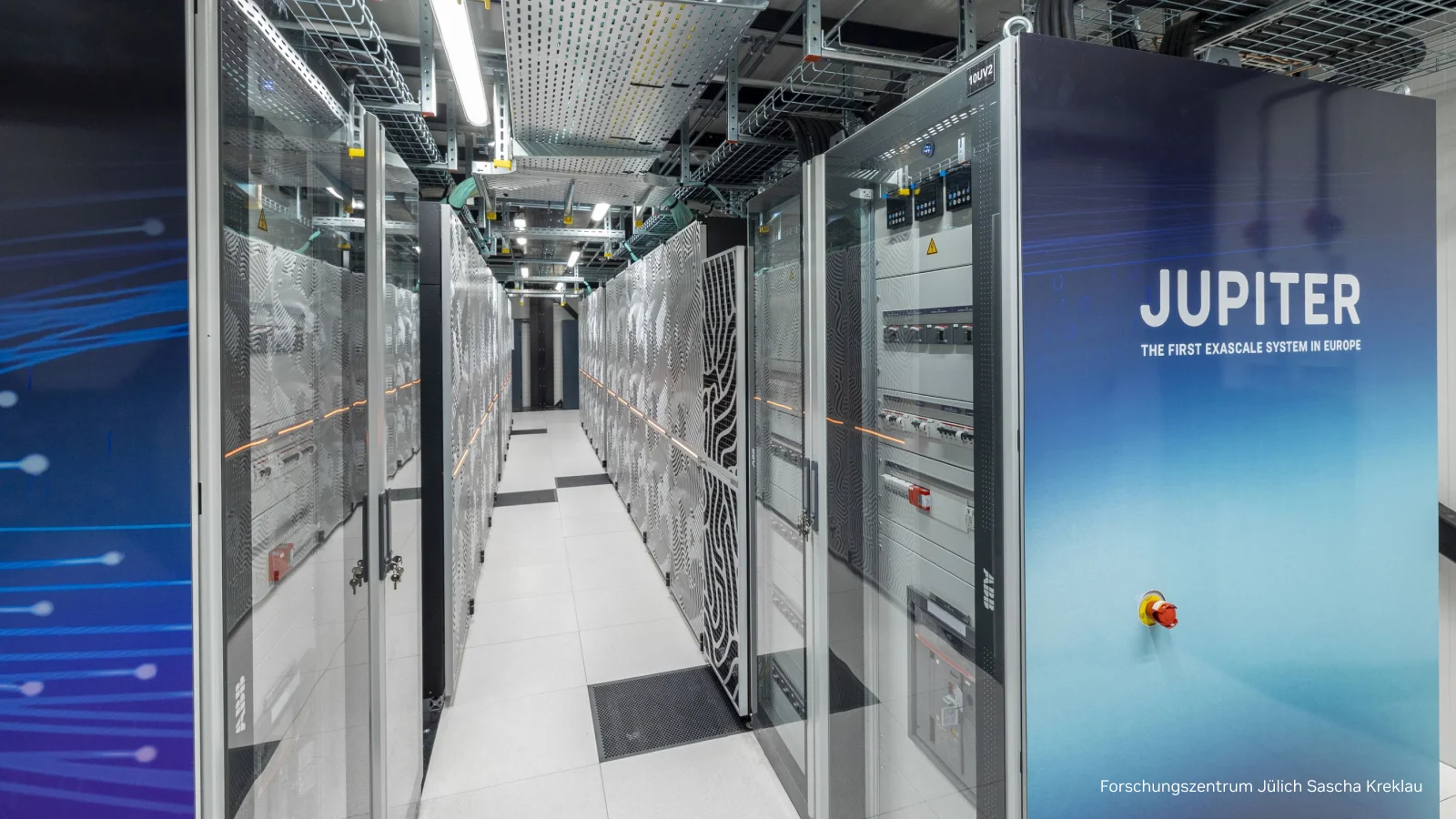
Quantum computers remain fragile machines, and the biggest obstacle to making them useful is the noise that creeps in every time a qubit is manipulated. Its researchers have now modelled an error-corrected quantum machine at a scale it calls unmatched, running the work on JUPITER at Germany's Jülich Supercomputing Centre, Nvidia said on Monday. The work examined magic state cultivation, a method for producing the special qubit configurations that error-corrected quantum machines consume continuously, and did so under realistic hardware noise rather than idealized conditions, according to Nvidia's newsroom release. The technique requires a small fraction of the physical qubits demanded by earlier approaches, the company said.
The point of such exercises is to let researchers predict how a quantum design will behave before anyone commits to fabricating it. Simulating qubits on conventional hardware is punishing because memory needs grow exponentially with every qubit added, which is why only the largest supercomputers can attempt it. Jülich and Nvidia set an earlier record on the same machine in November 2025, fully simulating a universal quantum computer under noiseless conditions and surpassing a mark Jülich itself had set in 2019 on Japan's K computer, the research centre said at the time. JUPITER, inaugurated in September 2025, is funded jointly by the European High Performance Computing Joint Undertaking, Germany's federal research ministry and the state of North Rhine-Westphalia, according to Jülich.
For Nvidia, the result extends a year of positioning its graphics processors as the classical backbone for quantum research. The simulation was developed at the company's Accelerated Quantum Research Center before being scaled up on JUPITER, using its cuQuantum and CUDA-Q software, Nvidia said. In April the company released Ising, a family of open-source AI models for quantum error correction and calibration, an announcement that sent shares of smaller quantum firms sharply higher that week, CNBC reported. Nvidia's hardware already powers more than 78% of the systems on the global TOP500 supercomputer list, its annual report states.