

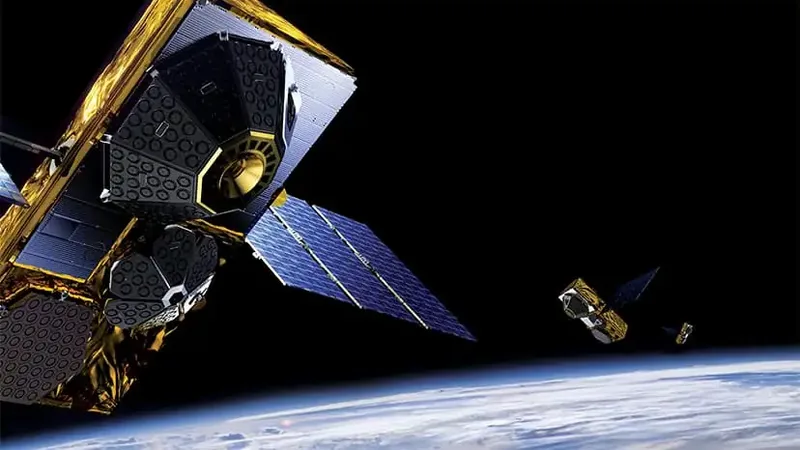
Amazon's push into space-based connectivity cleared a major checkpoint in Washington. The FCC's Space Bureau adopted an order approving Amazon Leo's acquisition of Globalstar, saying the transaction will expand direct-to-device competition, strengthen emergency communications, and improve service in unserved and underserved areas, the agency said in a release.
Globalstar is a small company by Amazon's standards but holds assets that are hard to replicate. Based in Covington, Louisiana, it operates a low Earth orbit constellation that provides voice, data, and asset-tracking services, and it sells wholesale network capacity to Apple for satellite features on the iPhone, with 477 employees and 2025 revenue of $273.0 million, according to its annual report. Its licensed mobile-satellite spectrum carries global authorizations, which Amazon Leo needs to send signals directly to ordinary phones rather than dedicated terminals.
The deal was structured to avoid a shareholder fight. Globalstar holders may elect $90.00 in cash or 0.3210 Amazon shares per share, for an implied equity value of about $11 billion, and holders of a majority of the voting power approved the merger by written consent, so no separate vote is required, the company said in its transaction presentation.
What happens next depends on foreign regulators and Globalstar's own satellite program. The US antitrust waiting period expired on July 17, 2026, and the company expects to close in 2027, subject to remaining approvals and meeting milestones on replacement satellites for its existing fleet, Globalstar said in its second-quarter release. Reuters framed the approval as a boost to Amazon's effort to challenge SpaceX's Starlink, and noted the FCC is set to vote this week on advancing a spectrum auction for direct-to-device services, the news agency reported.